

Beyond Borders: How Cross-Border Representation in Texas Reflects Modern Political Realities

The US-Mexico border

Texas law firms stand at the forefront of navigating complex immigration cases. The U.S.–Mexico border, a 1,954-mile stretch, pulses with stories of hope, struggle, and resilience. For many, crossing this border means chasing a better life, but it also means facing a web of legal challenges. Texas attorneys, especially those specializing in immigration law, tackle these cases against a backdrop of shifting political winds. Their work shapes not just individual lives but also the broader conversation around human rights and border policy. How do they balance advocacy with the realities of an ever-changing legal landscape?

The U.S.–Mexico relationship sets the stage for these legal battles. Trade agreements, diplomatic ties, and border security policies create a dynamic environment where immigration law thrives. Firms offering cross border representation Texas navigate this complexity, helping clients with cases ranging from asylum applications to deportation defense. These attorneys act as both legal strategists and advocates for fairness, ensuring their clients’ voices are heard. The stakes are high, as decisions made in Texas courtrooms ripple across communities on both sides of the border.

The Political Climate and Its Impact

Federal immigration policies shift with each administration. In recent years, Texas has seen policies swing from strict enforcement to more lenient approaches, only to pendulum back again. For instance, changes in asylum protocols or Deferred Action for Childhood Arrivals (DACA) eligibility create uncertainty for immigrants and their legal teams. Attorneys must stay agile, adapting to new regulations while advocating for clients caught in the crossfire. “We’re not just lawyers; we’re problem-solvers in a system that’s constantly in flux,” says Maria Gonzalez, an El Paso-based immigration attorney.

Texas law firms face unique challenges due to the state’s border proximity. The influx of migrants, particularly in cities like El Paso and McAllen, strains local resources and legal systems. Firms often handle:

  • Asylum cases for individuals fleeing violence in Central America.
  • Family reunification petitions for those separated by borders.
  • Deportation defense for long-term residents facing removal.

These cases require not only legal expertise but also cultural sensitivity and an understanding of international dynamics.

The Role of Lawyers in Human Rights Advocacy

Lawyers quietly shape the narrative around border issues. Beyond courtrooms, they advocate for systemic change through policy briefs, community outreach, and partnerships with nonprofit organizations. Their work amplifies marginalized voices, ensuring that human rights remain at the forefront of immigration debates. For example, pro bono clinics in border towns provide free legal advice to those who can’t afford representation. “Every case is a chance to uphold dignity,” notes attorney Javier Lopez, who volunteers at such clinics. Building trust with clients is critical, and learning how to connect with your lawyer can make a significant difference in navigating complex immigration cases.

Technology plays a growing role in cross-border representation. Firms use secure platforms to communicate with clients across borders, streamlining document collection and case management. Some even leverage social media to educate communities about their rights. Yet, technology can’t replace the human touch needed to build trust with clients who may fear authorities. This balance of innovation and empathy defines modern immigration law in Texas.

Challenges and Opportunities Ahead

Public perception often complicates legal work. Immigration remains a polarizing topic, with some viewing it through a lens of security and others through compassion. Texas attorneys must navigate these divides while maintaining professionalism. They face scrutiny from both sides: those who believe they’re too lenient and others who demand more aggressive advocacy. Finding common ground is tough but necessary.

Collaboration with Mexican legal systems offers new possibilities. Some Texas firms work with counterparts in Mexico to address cross-border issues like human trafficking or labor disputes. These partnerships foster mutual understanding and create pathways for fairer outcomes. However, language barriers and differing legal frameworks can slow progress, requiring patience and persistence.

Looking Forward

The future of cross border representation Texas hinges on adaptability. As political climates evolve, so too must the strategies of immigration lawyers. They’ll continue to bridge gaps between nations, advocate for human rights, and navigate the complexities of federal policy. Their work, though often behind the scenes, is a powerful force for change. Can they keep pace with the challenges ahead? The resilience of Texas law firms suggests they will, one case at a time.
Exclusivity and Authority: The Politics of Reservation in Gangnam Jjeom-O

Reservation has the connotation of control. The Gangnam Jjeom-O reservation (강남 쩜오 예약) is not merely a convenience to the consumers, but a tool of power, gatekeeping and control. It is a matter of concern in the political discourse, who takes the lead, who is turned back and how the rules are established. The Jjeom-O reservation politics is a political metaphor and actual understanding of how systems govern privilege.

Reservation as Governance

When establishments can accept Gangnam Jjeom-o reservation, they set down regulations. This includes who is eligible and on what conditions and under what circumstances. These regulations reflect the governance such as requirements, openness and discipline. Booking systems are miniature governments, politically speaking, with the definition of membership, quotas, blacklists, and benefits.

Reservation of Social Stratification

People who have a more advantageous position in access to reservation channels, i.e., insider applications, connection, faster internet have an advantage. The trend reflects itself in political inequality, the disadvantaged groups frequently fall behind those who are already privileged. Social capital, access to technology, e.g. iPhone digitization or networks, play a decisive role in the reservation system.

Policy Parallels & Oversight

Should the operators of reservations be supervised? Is there a need to regulate in order to avoid capricious refusals? Political institutions seek to reduce abuse. In the same manner, in case Jjeom-O reservation sites are either opaque or discriminatory, they can be scrutinized. Who is auditing their criteria, fairness and cancellation policies?

Perceived Legitimacy & Customer Compliance

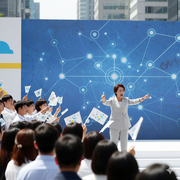
A group of people handling white flags and waving it over a political candidate standing and saying her speech on the stage. Individuals are willing to accept reservation regulations that they consider reasonable. Backlash will come about in case the users perceive the rules to have been arbitrary or biased. Legitimacy is the same thing that politicians and governments depend on just as operators depend on customers that trust them. Perceived fairness rather than enforcement makes a system successful.
Reservation vs First-come-Access

The dilemma: is it first-come, first-served or reservation-controlled capacity? This is reflected in politics with debates on whether to use quotas or open access, planned elections or spontaneous ones, planned allocation or free-for-all. Control over unpredictability is emphasized in the reservation systems, but can curb spontaneity and equity.

Public Discourse & Criticism

Reservations and quotas tend to be areas of contention in the political media:

  • who gets priority
  • who is locked out
  • where do the boundaries lie

Jjeom-O reservation policies are also subject to the same criticism. Journalists are asking the following questions:

  • who gains
  • who loses
  • is there enough transparency

Democratic vs Authoritarian Models

Reservation can be democratic (open slots, transparent criteria), or authoritarian (closed criteria, secret priorities). This is indicative of political standards. A highly edited booking list where there is no transparency is closer to central control.

A less structured system is closer to participatory values.

Conclusion

Nightlife logistics Gangnam Jjeom-O reservation is not an ordinary practice. It is a miniature of power, membership, and government. The question that political analysts, as well as nightlife critics, ought to pose is who is the one to set the limit, who is the one to enforce it, and who gains. The reservation is not merely a ticket. It is a proclamation of who is perceived, who will be listened to, who will be admitted and who will be rejected.

Voices, Power, and Public Space: The Cultural Politics of Gangnam Karaoke & Shirt Room

The contemporary karaoke room may look like a distant place in the political discussion. Yet, in a society where expression, identity, and social performance merge, the Gangnam Karaoke and Shirt Room experience provides more than music. It is an inquisitive miniature of democracy, a place where each voice, no matter what rank or class, is allowed to be heard. It has since become popular, particularly in the Seoul entertainment areas, where Gangnam karaoke recommendation (강남 가라오케 추천) is becoming a common search among locals in search of the best combination of music, performance, and freedom of expression.

The Democratic Stage, the Karaoke, and the Voice

On the surface, karaoke sounds very apolitical; it is leisure, pure and simple. However, go into a Shirt Room in Gangnam and you will come across something deeper being an experiment in equality. Any customer, office worker, or artist can get the mic, perform, and take control.

This democratization of voice in most aspects replicates the spirit of participatory governance. In a world where politics can be unhelpful to some groups of people, karaoke reverses the order. It provides people with the medium to be emotional, disagree, or feel weak, even in a song. The karaoke room is symbolized as a kind of a parliament of rhythm and self-expression.

Gangnam Urban Stage of Cultural Identity

Gangnam has been the icon of the economic and cultural rise of South Korea for long enough. It is an area that survives on visibility, invention, and re-invention. This is exactly the spirit of the Gangnam Karaoke & Shirt Room, which mixes musical, fashion, and ambiance in a manner that is simultaneously luxurious and affordable.

However, more than its neon luster and orchestrated sound systems, there is a more important social commentary: the social negotiation of public performance. The strict social and business hierarchies of Korean society do fade behind these walls. The CEO could sing with a new intern; strangers are turned into partners.

This provisional leveling of hierarchy produces a kind of political reverberation, a reverberation of the routine organizations of authority and esteem. It is the same phenomenon that political thinkers research when bringing up the issue of how entertainment, culture, and social media restructure civic participation.

Shirt Room: Fashioning Freedom

This trend is really differentiated by the Shirt Room element. Customers are welcome to choose clothes, t-shirts, jackets, and accessories, which correspond to their energy in the playground. Even what appears to be costume play is, in fact, addressing a greater reality, the way we move through social systems with the help of fashion and personality.

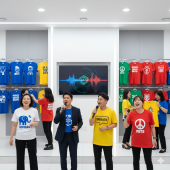
A group of political candidates singing karaoke inside a shirt roomSimilar to the way politicians work on their public images with the help of suits and slogans, karaoke performers create their identity with the help of attire and song. The Shirt Room is turned into a metaphor of political performance where wardrobe, lights, and performance are all used as a means of influence.

It is a place where rebellion, confidence, or vulnerability can be done in the name of punishment. And it is a kind of liberation of silence in that freedom, which is an examination of image politics and self-branding.

Non-Governmental Speech in Governmental Affairs

The most interesting part of Gangnam Karaoke and Shirt Room from a political perspective is its mixture; it is both intimate and public. The small booth provides the pretense of privacy to the act, but the performance of singing is necessarily public.

Such tension is the mirror image of modern political life. The social platforms and social talk put more boundaries between true and fake, personal opinion, and the social entity. Karaoke makes you viscerally feel this duality; you can be yourself, or you can be a role.

Soft Politics, Cultural Power and Entertainment

Soft power can be the force behind hard politics, especially in the era of cultural diplomacy. K-pop to K-drama has a massive influence throughout the world by the entertainment industry in Korea. The Gangnam Karaoke and Shirt Room is a spin of that soft power within the nation, a sort of social glue that unites classes, gender, and ideology with common performance.

By using Gangnam karaoke recommendations, locals are not just searching to find an option of nightlife, but to find a place to belong, to express, and to temporarily overcome the limitations of their daily life. The karaoke stage turns into a refuge and a declaration, one of the manifestations of how entertainment, in non-obtrusive terms, maintains freedom in daily situations.

Last Reflections: Politics of Song and Space

Every voice that is raised in Gangnam Karaoke & Shirt Room adds to the quiet democracy, mass participation via art. Intentionally or not, these spaces are a constant reminder that expression, however simulated, is still a potent equalizer.

The microphone can be taken by anybody in Gangnam, even in the political arena.

𐌢