
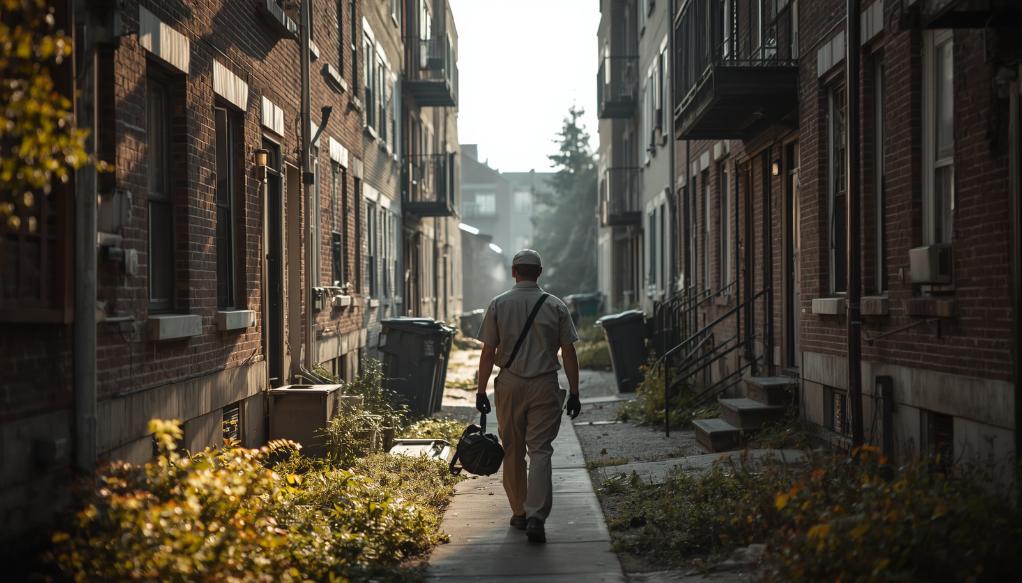
There aren’t many major speeches or pieces of legislation that visibly change a city overnight. Most change happens quietly on the street. Someone notices that something isn’t working, and someone else finds a way to remedy it.
In Buffalo, for example, the work done by Buffalo Exterminators connects closely to the realities of public health and urban living. It may seem like a small service, but in practice it becomes part of how a city manages everyday environmental problems that affect entire neighborhoods.
Many people think pest control is a narrow field. In truth, it touches a surprising number of areas: housing conditions, building maintenance, sanitation practices, and even the policy decisions that shape how cities are managed.
When rodents or insects spread through a neighborhood, it stops being a simple maintenance issue. It becomes a civic one. Whether local service providers succeed in addressing these issues often affects how safe and engaged a community feels.
One longtime resident once told me, with a bit of sarcasm, that it only takes a day to measure the health of a city. “Just see how long it takes someone to resolve the rats,” he said.
The remark stuck with me. The speed at which local governance addresses environmental complaints can indeed serve as a measure of its responsiveness.
The Small Business Layer of Urban Policy
Urban policy conversations often revolve around city councils, planning boards, or federal funding programs. Yet there is another layer that receives far less attention. Local service businesses interact directly with neighborhoods every single day, and they often notice patterns long before planners do.
Over time, technicians build informal knowledge about the health of a city simply by observing the environments they work in. They see where waste systems begin to break down, where building maintenance has been neglected, and where infrastructure quietly starts to age.
Much of this insight comes from places most policymakers rarely see: basements, service corridors, alleyways, and older apartment buildings.
Equally important are the conversations that happen along the way. Residents, property managers, and service workers exchange small pieces of information that gradually form a clearer picture of what a neighborhood is experiencing.
This kind of local knowledge can create a valuable feedback loop. When policymakers pay attention to it, cities become more responsive and better able to adapt their housing policies, sanitation systems, and maintenance strategies.
Listening to the Neighborhood
I once spoke with a property manager responsible for several older buildings. What I appreciated most was his straightforward way of describing things.
“Tenants notice problems first,” he told me, “but the people who come in to fix them start seeing the patterns.”
Patterns matter. A sudden spike in pests on one block could indicate a drainage problem. An issue affecting several buildings could point to poorly managed waste collection nearby. When professionals working in the field notice and report these patterns, they help cities direct attention where it’s actually needed.
Solutions also tend to move faster when they grow out of collaboration. Residents, landlords, and service providers each contribute unique perspectives to the same puzzle, and when these perspectives converge, the implementation of practical solutions becomes more feasible.
The Significance of Prevention Over Reaction
There has been a gradual shift in urban planning toward prevention rather than crisis response. Cities are increasingly recognizing that consistent attention to small problems is essential for maintaining healthy neighborhoods before they escalate into larger issues.
Preventive services, including pest management, play a quiet but important role in that approach. Early maintenance of housing conditions reduces risks and tends to lower long-term costs for both residents and city services.
A well-functioning city often behaves a bit like a routine of care. It relies less on emergency fixes and more on steady maintenance. The philosophy may seem modest, but it represents a practical way of contemplating how cities actually stay livable.
And occasionally the clearest signals about what a city needs aren’t found in policy documents. They’re found in the everyday work happening in buildings, basements, and neighborhoods across the city.